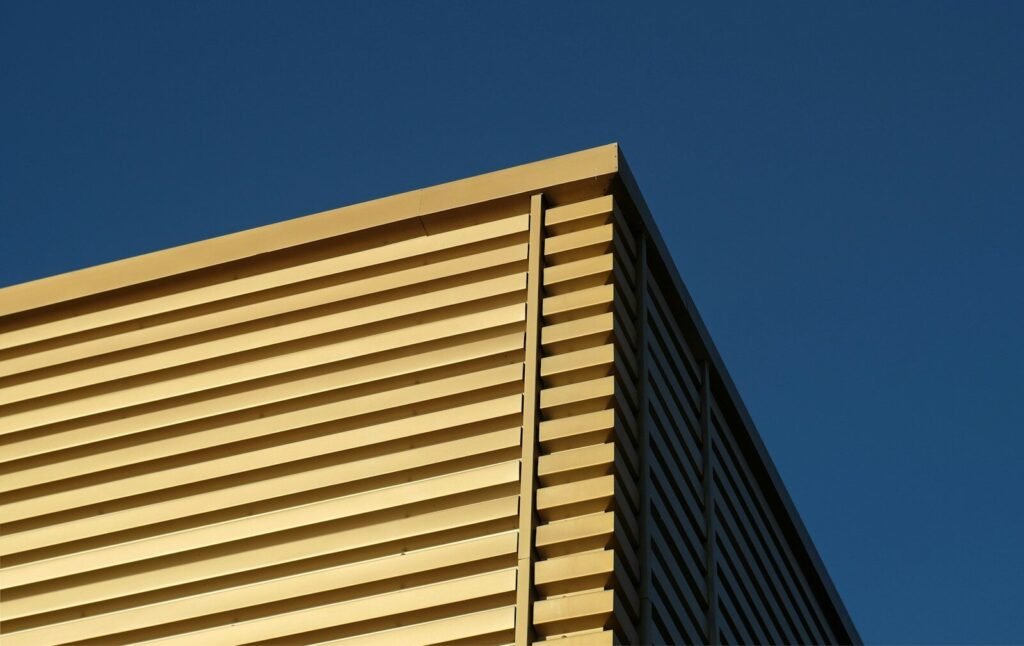
Cladding is the use where getting the species right matters least, and getting everything around it right matters most. Cedar, larch and thermowood will all clad a wall and look good doing it — the differences that ruin jobs are profile, ventilation and how much room the boards have to move.
That’s the whole job: the timber is the easy part. Here’s how the choices actually break down.
Timber choices for cladding
Four species do most of the work. They’re genuinely different, and the right one depends on what you care about most.
- Western Red Cedar
- Stable, low movement, naturally durable and needs no finish to perform. This is the choice when the priority is a cladding that behaves itself and you can leave to silver down. It’s the most forgiving of the four and the most expensive.
- Larch
- The value exterior softwood, and often the UK-grown option. Naturally durable in the heartwood and looks a good deal like cedar, but it moves more and is more prone to twisting and checking. Cheaper than cedar and a well-proven choice for cladding — as long as it’s fixed properly.
- Thermowood
- Heat-treated softwood — dimensionally the calmest of the four, and it takes stain and colour evenly, which is why it’s the usual pick for a dark or consistent façade. It weathers to a stable grey-brown rather than silvering like cedar.
- Sweet Chestnut
- The domestic alternative with real exterior durability in the heartwood. Coarser than cedar and softer, but it holds up outdoors and is a sensible answer where oak would be specified unnecessarily.
There’s no wrong answer here — only a right answer for the look and the budget. Which leads to the distinction that actually decides the job:
Cedar, larch or thermowood?
Cedar if you want stability and no finish. It moves least, needs least, and weathers to a soft silver that most people are happy to leave alone. You are paying for it to behave.
Larch if you want the UK-grown option and a better price. You’re trading some stability for value — and you take on the responsibility of fixing it well, because larch will show you if you haven’t. Fixed with proper ventilation and allowance behind, it’s a very long-lasting cladding. It’s also worth reading the larch page’s supply notes before specifying — the Siberian larch situation has made provenance part of the buying question.
Thermowood if you want dark and dimensionally dead. The heat treatment means the boards barely move and they take a finish consistently, which is why it suits modern dark façades and stained schemes. It’s also the one that holds a colour evenly across a large elevation.
Practical notes
Profiles you’ll be asked about
- Shiplap — each board sits just behind the edge of the one below. Neat, traditional, forgiving of slight movement.
- Tongue and groove — flat face, no overlap, and the usual choice for a crisp contemporary look. Softer profiles hide movement less well than shiplap does.
- Feather edge — tapered boards, usually fixed vertically. Rustic, and it sheds water well.
The profile matters more than people expect: a flat face shows every bit of movement in the boards behind it, where an overlapped profile absorbs it. If you’re set on a flat profile in a timber that moves, that’s a decision worth making knowingly.
Movement and ventilation
Cladding moves. It moves across the grain, and it moves more in summer than most people plan for. Every board wants a ventilated cavity behind it and room to swell and shrink without being pinned. Cladding fixed tight to a solid wall, or screwed hard at every point, will cup and split — and the timber will get the blame.
Fixing
- Use stainless or appropriate-grade fixings. Standard steel corrodes, particularly in wet exterior conditions — and some timbers (oak, chestnut, iroko) actively accelerate it. Rust streaks down a clad wall are almost always the fixing, not the timber.
- Don’t fix too close to the ends. A screw acts as a wedge, and near a board end there isn’t enough material either side. Predrill and keep back from the ends.
- Leave the expansion gap. It’s the difference between cladding that settles and cladding that splits.
Weathering and finishing
Untreated exterior timber weathers — surfaced colour fades to grey or grey-brown depending on species. This is a surface change, not decay, and plenty of cladding is meant to be left that way. If you want to hold a colour, an oil or stain slows the change but needs reapplying. Decide which you want before you fix it, because you can’t easily change your mind later.
Work out how much you need before you buy
Cladding quantities catch people out because board width isn’t coverage — profiles overlap, so the coverage is narrower than the nominal board. Work out the area, then the board count with an allowance for wastage, and you won’t be short mid-elevation. The cladding calculator does that for you, and it’s free to use.
Related
- Choosing Timber For Cladding — the species, profile and fixing decisions in more detail.
- Western Red Cedar · Larch · Thermowood · Sweet Chestnut
- Iroko — durable exterior hardwood, worth knowing about for cladding and exterior joinery.
Working out what to clad with
Cedar, larch and thermowood will all clad a wall and look good doing it. The things that ruin jobs are the profile, the ventilation behind it, and how much room the boards are given to move — none of which show up in a photograph.
If you are not sure which way to go, tell me what you are cladding and I will point you at the profile and the species that suit it, and what to ask a supplier before you order.